
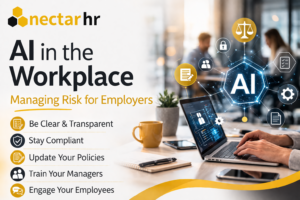

Using AI in the Workplace: How Employers Can Mitigate Risk
Artificial intelligence is increasingly being used across UK workplaces, from recruitment software that screens CVs to tools that analyse productivity and performance data. While these technologies can bring clear efficiency benefits, they also introduce legal, ethical and employee relations risks if they are not implemented carefully.
For employers, the challenge is not simply adopting new tools, but ensuring that their use is transparent, fair and compliant with employment and data protection law.
Here are four key areas organisations should consider when introducing AI or other advanced technology into the workplace.
Be Clear and Transparent About AI Use
Employees should always understand when, where and how AI is being used within the workplace.
For example, organisations may use AI tools to:
- sift or rank CVs during recruitment
- monitor productivity or attendance
- analyse employee performance data
- support decision-making in HR processes
If technology is being used in these areas, employers should clearly explain:
- the purpose of the technology
- what data it uses
- how decisions are influenced by the system
- where human oversight remains
Transparency is important not only from a compliance perspective but also for building trust.
Clear communication helps prevent suspicion or resistance from employees who may worry about surveillance or unfair automated decisions.
Employers should also ensure their approach aligns with data protection obligations under the UK General Data Protection Regulation.
Review and Update Workplace Policies
Introducing AI often requires updates to internal policies and procedures. Existing HR policies may not currently cover how automated systems are used in decision-making or employee monitoring.
Employers should review policies relating to:
- recruitment and selection
- employee monitoring
- performance management
- data protection and privacy
- disciplinary processes
Policies should clearly explain:
- where AI tools may be used
- how outcomes will be reviewed
- who remains accountable for decisions
Ultimately, AI should support HR processes rather than replace responsible human oversight. Updating policies ensures there is a clear framework for how technology is used and helps protect organisations if decisions are later challenged.
Train Managers and Decision-Makers
Technology should never replace informed human judgment. Managers and HR professionals must understand how to use AI tools responsibly and how to interpret their outputs.
Training should help managers:
- understand the strengths and limitations of AI systems
- recognise potential bias in algorithm-driven outcomes
- question unexpected or unusual results
- maintain responsibility for final decisions
If an employee challenges a decision influenced by AI, managers must be able to explain how the outcome was reached and why it was fair. This reinforces accountability and ensures organisations remain compliant with employment law.
Involve Employees in the Conversation
Introducing AI without consultation can create anxiety and disengagement within the workforce.
Employees may worry about issues such as:
- workplace surveillance
- job security
- unfair or biased decision-making
- misuse of personal data
Employers can mitigate these concerns by engaging with employees early in the process.
This might include:
- explaining why AI is being introduced
- highlighting benefits such as reducing repetitive administrative work
- listening to employee concerns about fairness or privacy
- inviting feedback before new systems are rolled out
When employees feel involved and informed, they are much more likely to accept and even support the use of new technology.
Creating a Responsible Approach to Workplace Technology
Artificial intelligence has the potential to significantly improve workplace efficiency and decision-making. However, organisations must balance innovation with fairness, transparency and legal compliance. By focusing on clear communication, strong policies, training and employee engagement, employers can reduce risk while still benefiting from technological advances.
Supporting Employers with Responsible AI Implementation
At Nectar HR, we help organisations navigate emerging workplace challenges, including the responsible use of technology and AI.
Our team can support you by:
- reviewing HR policies to ensure they cover AI use
- training managers on responsible decision-making
- advising on employee engagement and consultation
- helping ensure compliance with employment and data protection law
If you are introducing AI or technology tools into your workplace and want to ensure they are used safely, fairly and transparently, get in touch with our team.